How is prosecco made?
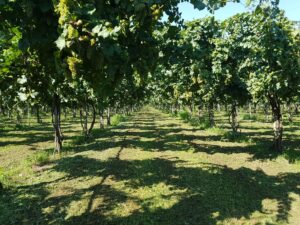
Its mid-September in north-east Italy; the glera grapes dangling from the vines have turned a golden yellow and their degree of maturation is just right: the time has come to harvest the grapes, and the long process which will culminate in the production of Prosecco DOC has commenced. After their hand picking to avoid unnecessary damage, the grapes are transferred to the winery for processing. Thanks to use of a gravity drop system, they arrive at the press intact with their full aromatic profile. But what happens next? How are these grapes transformed into one of the most famous sparkling wines in the world?
Alcoholic fermentation of the must
At this point, the grapes are gently crushed, at a fixed temperature of 14°C, using pneumatic presses to obtain the must. The must is collected in tanks ready to be de-cantered for the next stage of the process.
Selective native yeasts are added to the clear part of the must, and the alcoholic fermentation then starts, continuing for about 10-12 days in steel tanks at a constant temperature of 15-18°C. This produces the so-called base wine, which is then ready to be transformed into a sparkling wine. It takes place in large steel containers (autoclaves), into which the base wine is introduced together with cane sugar and selected native yeasts.
The refermentation of prosecco in autoclaves
The production of prosecco requires that the base wine undergoes a second fermentation for at least 40-50 days. It is important that this process is slow and gradual in order to enhance the wine’s effervescence and not to “stress” the wine. The alcohol content will increase to 11-11.5%, starting from the base wine’s value of about 10-10.5% vol. Following this period, the Prosecco is bottled and classified as extra brut, brut, extra dry or dry, according to the concentration of sugars per gram/litre. After 30 days of bottle aging, the wine is ready to be served, to toast the most important moments of a life or simply to accompany a meal.